OpenZhenZhen AI 提示词画廊 · gpt-image-2.5 · image
实验性科学档案刊物海报设计
Experimental Science Archive Journal Poster Design
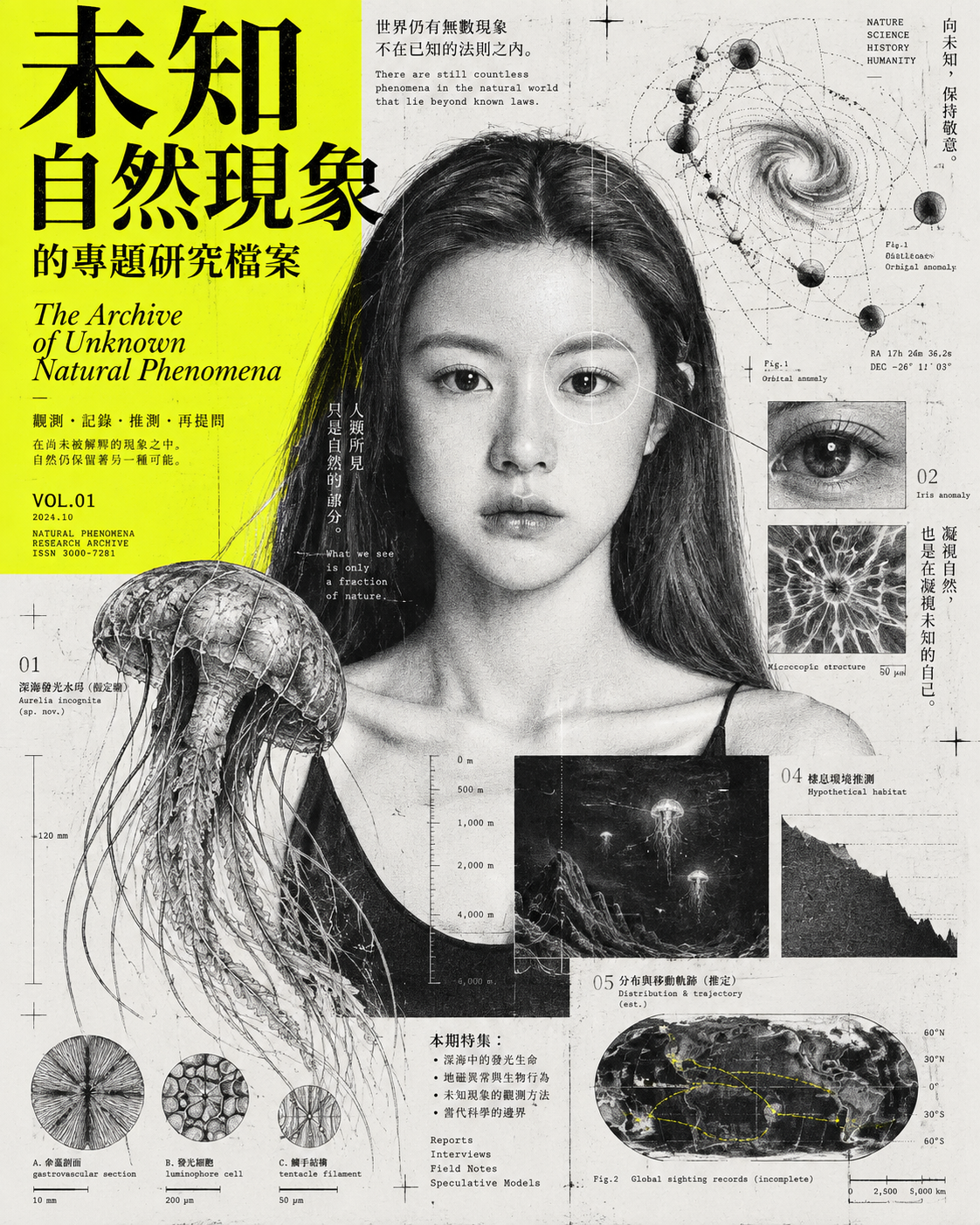
围绕可变创作主题生成竖版知识档案海报,以黑白科学图鉴线描、荧光黄色色块、非对称现代主义网格、精细标注和独立出版物印刷触感构成高密度编辑视觉。
提示词 / Prompt
中文提示词
围绕关于未知自然现象的专题研究档案设计一张竖版实验性杂志封面或文化海报,营造知识档案、科学图谱、编辑设计、东方文字与现代主义排版融合的气质。先从主题提炼一个代表性主体、2–4个次级物件、一个可拆解或标注的结构、一个象征性自然物/器官/机械零件/植物/昆虫/建筑/历史器物,以及相关箭头、坐标、比例、轨迹、连接线、编号和注释;所有元素必须与主题存在概念联系。使用科学图鉴、古典百科、植物学图谱、昆虫标本、人体解剖图、机械专利图、天文轨道图、考古档案或自然史铜版画等一种或多种视觉转译,不采用常规商业摄影。采用竖版4:5比例和严谨但故意打破的非对称现代主义编辑网格:保留大面积浅灰白负空间,信息分布在不同密度区域,局部拥挤、局部空旷,部分图像、文字和线条被页面边缘裁切;加入一个醒目的荧光酸性黄色矩形色块,占画面约四分之一至三分之一。使用超大中文衬线标题与优雅英文斜体或衬线标题,标题与科学插图互相遮挡穿插;黄色色块承载部分标题、图鉴或注释,页面边缘有极小出版信息,下方或侧边有极小专题简介。主要图像采用黑色单色精细钢笔线描、蚀刻线、交叉排线、点描、木刻或铜版画质感;一幅主题主体图像占较大面积并可跨越两个版面区域,再加入3–6个局部放大、切面、轨迹、标本、零件、微观结构或观察角度辅助图,以极细指示线、箭头、圆形定位符、比例尺、坐标线和编号建立关系。可加入少量研究者批注、圈选、十字定位符、裁切标、测量线、标本编号、几何辅助线、统计波形或虚构出版标识,但不得成为无意义装饰。色彩严格限制为纸张浅灰白、纯黑、荧光黄/酸性柠檬黄和极少中性灰,不出现其他明显彩色。保留轻微纸张纤维、复印机噪点、油墨不均、套印误差、半色调颗粒、局部墨迹偏重、划痕、裁切痕迹、旧档案扫描感和微弱折痕,但质感克制,不严重破损、不遮挡信息。画面平面化、纸面化、编辑化,兼具理性、实验、学术、文学、先锋、安静、冷峻、精密和神秘气质。根据本次主题重新建立视觉隐喻与版式结构,不复制任何现有作品的标题、插图对象、黄色区域、页面编号、标志、字体组合、文字排列或构图比例。避免写实商业摄影、电影海报感、广告模特、3D渲染、立体文字、玻璃/金属材质、霓虹、赛博朋克、柔和渐变、厚重阴影、梦幻光效、卡通/动漫/儿童绘本、企业宣传页、模板化信息图、居中对称、满版照片、严重泛黄、丰富彩色、无意义装饰、杂乱涂鸦、低清线稿、乱码和直接复制参考作品。
English prompt
Design a vertical experimental magazine cover or cultural poster around 关于未知自然现象的专题研究档案, combining knowledge archives, scientific mapping, editorial design, Eastern characters, and modernist typography. First derive one representative subject entity, 2–4 secondary objects, one structure that can be dissected or annotated, one symbolic natural object, organ, machine part, plant, insect, building, or historical artifact, plus arrows, coordinates, proportions, trajectories, connectors, numbering, and notes related to the theme. Every element must have a conceptual relationship to the subject. Translate it through one or more scientific atlas, classical encyclopedia, botanical plate, entomological specimen, anatomical diagram, mechanical patent, astronomical orbit chart, archaeological archive, or natural-history engraving language rather than conventional commercial photography. Use a vertical 4:5 format and a rigorous but intentionally disrupted asymmetric modernist editorial grid: retain large pale-gray-white negative space, distribute information across varied density zones, keep some areas crowded and others extremely open, and crop selected images, text, and lines at the page edges. Add one prominent fluorescent acid-yellow rectangle occupying roughly one quarter to one third of the frame. Use an oversized Chinese serif title with an elegant English italic or serif title; let titles overlap and interlace with scientific illustrations. Place part of the title, atlas, or annotation on the yellow block, add tiny publication information near an edge, and include a tiny feature synopsis below or at the side. Render the main imagery as black monochrome fine pen drawing, etching, crosshatching, stippling, woodcut, or copperplate texture. Make one important theme image large and able to cross two layout regions, then add 3–6 smaller detail enlargements, sections, trajectories, specimens, parts, microstructures, or alternate views, connecting them with hairline indicators, arrows, circular locators, scales, coordinate lines, and numbers. Add only a few researcher notes, circles, registration crosses, crop marks, measurement lines, specimen numbers, geometric guides, statistical waveforms, or fictional publication marks; no meaningless decoration. Restrict color to pale paper gray-white, pure black, fluorescent yellow or acid lemon yellow, and very little neutral gray, with no other obvious colors. Preserve restrained paper fibers, copier noise, uneven ink, registration error, halftone grain, heavier ink patches, tiny scratches, crop traces, archival-scan character, and faint creases without severe damage or obscuring information. Keep the work flat, paper-based, and editorial, with rational, experimental, academic, literary, avant-garde, quiet, precise, and mysterious energy. Rebuild the visual metaphor and layout specifically for this subject; do not copy any existing work's title, illustration objects, yellow shape or position, page numbers, marks, font pairing, text arrangement, composition ratio, or cropping. Avoid realistic commercial photography, film-poster styling, advertising models, 3D rendering, extruded type, glass or metal materials, neon, cyberpunk, soft gradients, heavy shadows, dreamy effects, cartoon/anime/children's-book styling, corporate brochure layouts, generic infographics, centered symmetry, full-bleed photography, severe aging, multicolor palettes, meaningless decoration, messy doodles, low-resolution linework, garbled text, or direct replication of a reference work.
探索更多图片和视频提示词 · 生成图片 · 生成视频 · 在 AI 画布中创作
相关作品
- 玻璃番茄温室 · 自然科学
Moss Image 原创创意图集|自然科学|玻璃番茄温室。原创提示词生成。
- 复古手绘城市旅行徽章插画模板
将来源中的方括号占位符改为明确的双语变量,并提供可直接使用的京都默认值与准确中文对应项;保留暖白底、圆形旅行徽章、黑墨线稿/交叉排线、少量目的地代表色、上方标题和下方短标语。
- 竹林弓手 · 黑白银盐
Moss Image 原创创意图集|黑白银盐|竹林弓手。原创提示词生成。
- 冰川独木舟 · 建筑杂志
Moss Image 原创创意图集|建筑杂志|冰川独木舟。原创提示词生成。
- 法式复古水彩旅行日记封面模板
把地点与地标占位整理为有准确双语默认值的变量模板;修正来源末尾的英文拼写错误,保留法式复古旅行插画、水彩与水墨手绘质感、封面排版和指定历史文案。
- 温馨居家室内照片与水彩双联艺术版式
整理为竖幅4:5的室内主题编辑版式:上方为温馨客厅照片,下方为同一空间的复古纸本水彩转绘,保留奶油沙发、彩色靠垫、木茶几、复古地毯、绿植、书架、植物画、窗光与暖吊灯;附精确英文手写短句。原始房间图仅作为待阶段3核实的构图参考依赖,不声称已传入。