OpenZhenZhen AI 提示词画廊 · gpt-image-2.5 · image
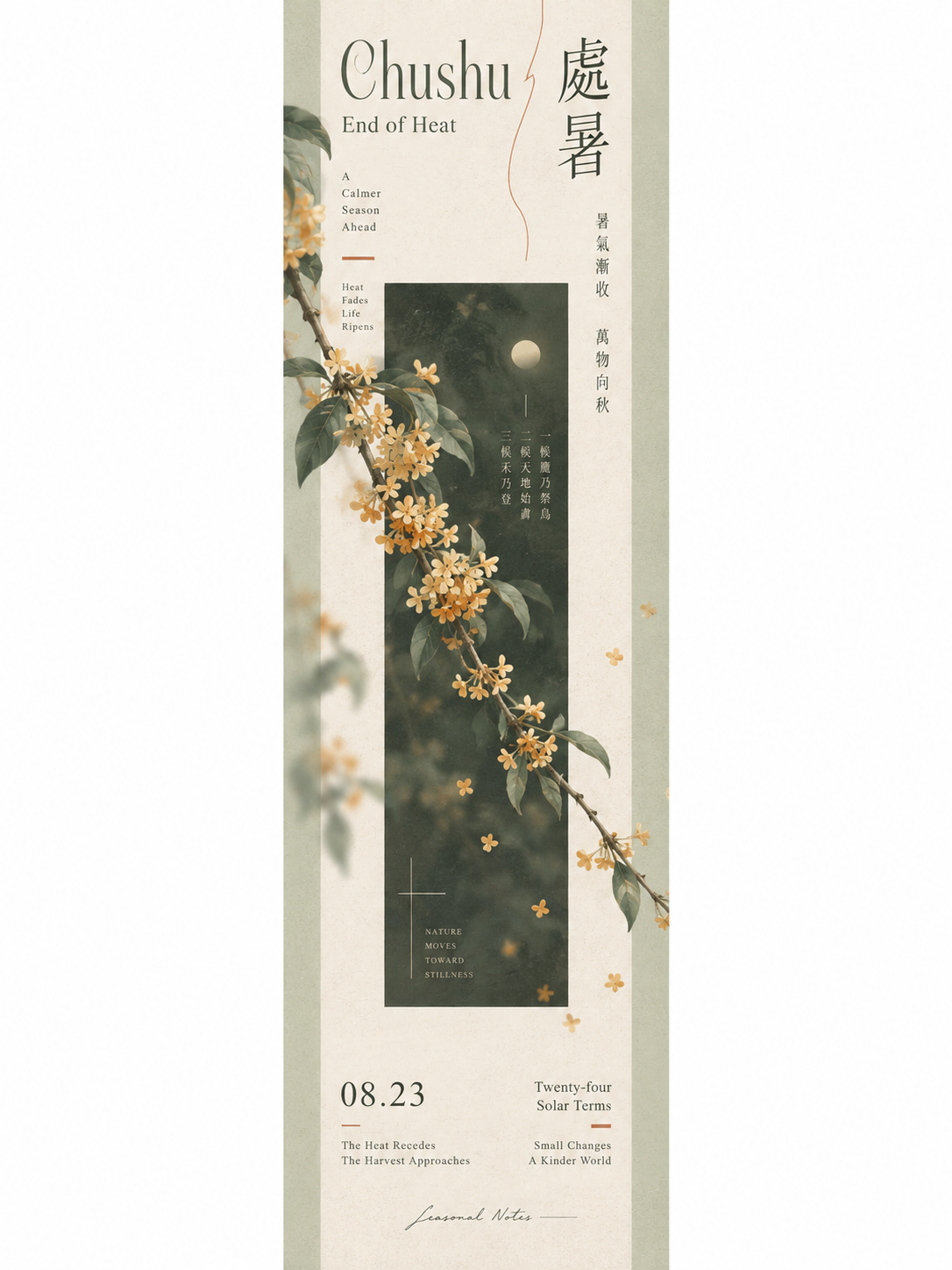
处暑主题现代纸印编辑视觉
Modern Paper Print Editorial Visual for End of Heat
来自 OpenNana 的图像提示词,已按本地图像分类和站点 gpt-image-2.5 归类整理。 使用时需上传人物参考图;本流程使用统一参考人物生成示例。
提示词 / Prompt
中文提示词
围绕具体主题内容生成一张极窄长的竖版编辑视觉,让外部大色场、中央暖白纸页与纸页内缩的主题画窗构成三层清楚的平面空间。先从主题的状态对照与情绪温度中推导两种结构色,以一条硬水平分界覆盖画面绝大面积;在内嵌画窗中用相同方向和相近比例缩小复述这组分区,外场更明、更空,窗内更深、更密,纸白作为全画最高明度的隔层。画面重量集中在中段,上部保留宽阔标题区,下部留出舒展的情绪落点;纸页边缘平直,不使用厚重悬浮阴影,画窗下方保留宽阔注释带。 从主题的方向、过程、结构连接与时间变化中提取一条连续可识别的核心形态,把它组织成贯穿中段的单一斜轴,使其从画窗内部跨过至少两道边界,压住窗框、进入纸面留白并延伸到外部色场。跨界形态保持完整连续,越过边缘的端点保留最清楚的识别轮廓,内部细节适度压缩;局部形态沿斜轴由密到疏,其余辅助对象缩成安静的小型几何焦点,稳定留在画窗内部并靠近色场分界。让水平色界、竖向画幅、矩形纸页和内窗维持严格正交秩序,只有核心主题获得破格权,以准确遮挡关系建立空间,而不是依靠透视或戏剧投影。 在主题动势的一侧边缘布置少量同源回声:将核心形态放大、裁切、降低叠层与对比,强烈失焦到只剩柔软色块,局部越出画布;中心主体保持清楚,另一侧保持干净,使平面色场获得浅层空气和记忆感。色彩保持清晰的面积秩序,两个结构色共同占据约八成画面,主题中介色跨越两场并缝合冷暖或状态差异,一个小面积强调色只在窗内视觉焦点与纸页外文字手势处远距离出现两次。具体色相随主题改变,但纸白最高、少量深轮廓压住结构、强调色以饱和度而非面积取胜的明度关系保持稳定。 文字系统延续图像的秩序与越界关系。主标题使用瘦长、细锐、笔画反差明显、端点精致的编辑衬线骨架,中文采用纤细而有书刊气质的字形,字距舒展;将一个关键词转化为连续自由的手写细线,轻轻穿过或邻接印刷标题,形成与主题斜轴呼应的私人笔迹。解释性信息缩进纸页下部,以两组中细小字和日期型微字分列;纸页外下方可用一组带长收笔的手写文字承接第二个强调色,最底边只保留极小元数据。让标题、图像、注释和页脚依次降低密度,不让文字压住核心识别边缘。 以无方向的柔和日光和低阴影处理对象,使主题保留有限的真实材质,却仍服从平面色块。全图覆盖极轻的艺术纸纤维、细印刷网点与低对比扫描颗粒,纸页和画窗中的纹理略明显,外部纯色场更克制;对象边缘允许微小印刷柔化与溢色,关键轮廓和字形仍保持清洁。最终画面第一眼呈现双色长幅中的白色纸窗与从窗内连续生长到窗外的主题形态,随后才显露失焦边影、精细题头、手写干预和微型注释,形成严格编辑秩序与鲜活时间感并存的现代纸印视觉。 主题:二十四节气之处暑 比例3:4
English prompt
Create an extremely narrow, long 3:4 vertical editorial print for the theme Chushu (End of Heat) in the Twenty-four Solar Terms. Build three planar spaces: a large outer color field, a central warm-white paper page, and an inset theme window. Derive two structural colors from the theme's state contrast and emotional temperature; divide the outer field and inner window with matching hard horizontal boundaries. Keep the outer field brighter and emptier, the window deeper and denser, and paper white the highest brightness. Concentrate visual weight in the middle, leaving a wide title area above, a calm landing area below, straight paper edges without heavy floating shadows, and a broad annotation strip under the window. Extract one continuous, recognizable core form from the theme's direction, process, structural connections, and temporal change. Run it along a single diagonal axis through the center, crossing at least two boundaries from the window, over the frame, through the paper, and into the outer field. Keep the crossing endpoints most recognizable and compress internal detail moderately. Let the form become denser to sparser along the diagonal; reduce auxiliary forms to quiet geometric points inside the window or near the color boundary. Keep the color boundary, vertical frame, paper rectangle, and inner window strictly orthogonal; only the core theme may break the grid, with space defined by accurate occlusion rather than perspective or dramatic shadows. Add a few homologous echoes on one side: enlarge and crop the core form, lower its transparency and contrast, and blur it into soft color blocks that partly leave the canvas. Keep the central subject clear and the opposite side clean. The two structural colors should occupy about 80% of the image; an intermediate theme color should bridge both fields, while a small accent color appears twice at distant visual focus points, once in the window and once in the text gesture outside the paper. Preserve the brightness order: paper white highest, deep outlines reinforcing structure, accent color winning by saturation rather than area. Use an elongated sharp editorial serif title with strong stroke contrast and refined terminals; Chinese characters should use a slender bookish typeface with relaxed spacing. Turn one keyword into a continuous thin freehand line that passes through or beside the title and echoes the diagonal axis. Indent explanatory information at the bottom of the paper in two groups of medium-thin text with date-like microtype. Outside the paper, add only a small handwritten line with a long closing stroke and minimal footer metadata. Let title, image, annotations, and footer decrease in density so text never suppresses the core outline. Use directionless soft daylight and low shadows. Retain limited realistic texture while subordinating objects to planar color blocks. Cover the print with very light art-paper fibers, fine printing dots, and low-contrast scanning grain; make paper and window texture slightly clearer than the restrained outer field. Allow slight print softening and color bleed, while key outlines and glyphs remain clean. The result should read first as a white paper window in a two-color long format, then reveal a continuous theme form, soft side echoes, refined headers, handwritten intervention, and micro-annotations: a modern paper-print visual where strict editorial order and a vivid sense of time coexist.
探索更多图片和视频提示词 · 生成图片 · 生成视频 · 在 AI 画布中创作
相关作品
- 幻想系都市霓虹成年女性3D人像
一张9:16竖版高质感3D CG都市夜景时尚人像:一位明确25岁以上的成年虚构女性位于画面中央偏右,身体微微前倾,双手轻撑窗台或台面并回头望向镜头,姿态自然优雅。她穿珍珠白缎面细肩带晚礼服,背部优雅露背但覆盖得体、面料不透明,布料褶皱自然。她站在高层简约室内落地窗前,窗外蓝色夜空与城市灯光形成梦幻散景。主色为浅粉、珍珠白、冰蓝、淡紫与冷霓虹蓝,电影感柔和面部光、轻体积光和真实丝缎/肌肤材质。采用半写实二次元美术与精致角色建模,浪漫、静谧、成熟,不描绘未成年人或暴露内容;身份仅由ref-10a-v1引导。
- 橄榄绿背景下凝视木陀螺的成年女性
一幅正方形、静谧的绘画感肖像:一位成年女性在深色旧木桌旁凝视手中的彩绘木陀螺。左侧柔光、斑驳橄榄绿墙面与低饱和胶片质感营造沉思氛围。
- 成年女性巫师学院风角色扮演直闪人像
一位二十岁出头的成年东亚女性以俏皮的巫师学院风角色扮演造型站在白色镶板门前;祖母绿内衬长袍、针织制服层搭与直闪投影构成暗黑学院风人像。需绑定人物身份参考图。
- 成年东亚女性AI角色一致性参考表
依据上传的人像制作专业角色参考表,确保所有画面均为同一位成年东亚女性,并严格保持面部、肤色、发型与体型一致;避免换脸、动漫或CG效果及过度磨皮。
- 海军蓝制服风都市街拍全身人像
成年东亚女性身穿海军蓝西装与百褶短裙,搭配领带、长袜和玛丽珍鞋,在简洁的灰墙街景前手持眼镜与包带;柔和日光呈现克制的都市时尚全身像。需绑定人物身份参考图。
- 冷白直闪下的蝴蝶饰物成年女性近景
冷白直闪写实近景中,一位成年东亚女性佩戴银色蝴蝶发夹并在下巴旁轻持另一枚蝴蝶饰物;黑白造型、疏离神情与简洁墙面构成3:4竖幅人像。需绑定人物身份参考图。